
AEO and GEO
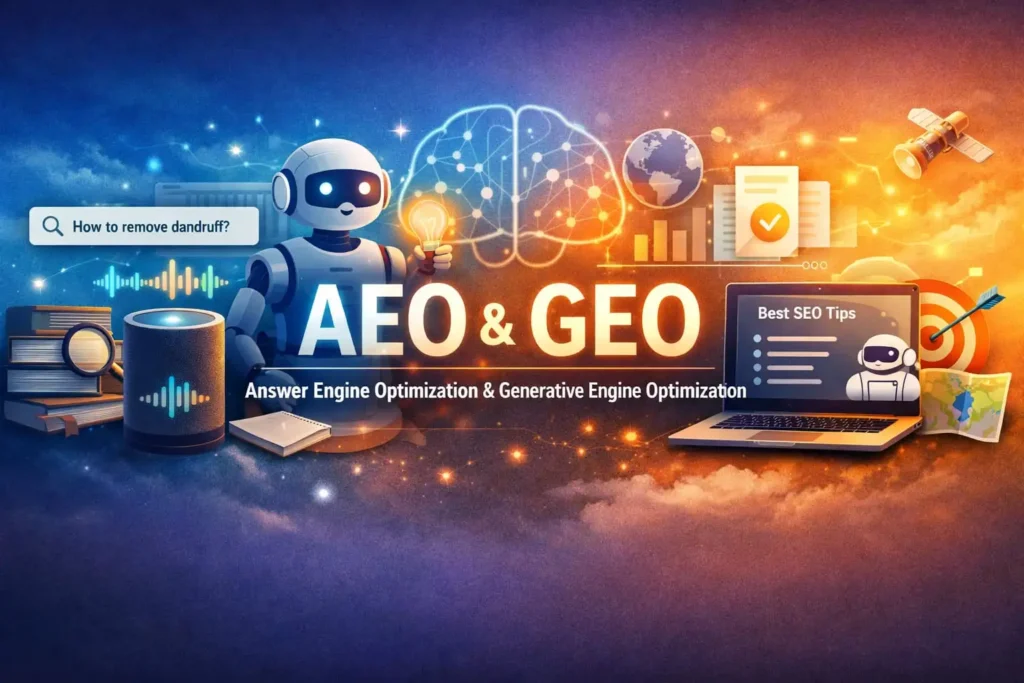
What is AEO and GEO?
In today’s digital world, search is changing fast. Earlier, we focused only on SEO (Search Engine Optimization). But now, new concepts like AEO and GEO are becoming important. If you want your content to be visible in modern search and AI results, understanding AEO and GEO is necessary.
Let’s learn in simple words what AEO and GEO mean, why they matter, and how to use them.
What is AEO (Answer Engine Optimization)?
AEO stands for Answer Engine Optimization.
It means optimizing your content so that search engines and AI tools can easily find direct answers from your content and show them to users.
Today, people don’t just search for websites. They ask questions like:
“What is digital marketing?”
“How to remove dandruff naturally?”
“Best beginner SEO tips?”
Search engines like Google try to show quick answers at the top, such as featured snippets, voice assistant responses, or AI summaries.
AEO helps your content become that direct answer.
Simple Example:
Instead of writing long complicated paragraphs, AEO focuses on:
Clear headings
Direct answers
Simple explanations
FAQ style content
What is GEO (Generative Engine Optimization)?
GEO stands for Generative Engine Optimization.
This is a newer concept related to AI tools like ChatGPT, Google AI Overview, and other generative search systems.
GEO means creating content that AI systems can understand, trust, and use when generating answers for users.
Instead of only ranking on search pages, your content becomes part of AI-generated responses.
Simple Example:
When someone asks an AI:
👉 “Best beginner digital marketing strategy”
The AI creates a new answer by combining trusted information. GEO helps your content become one of the trusted sources behind that answer.
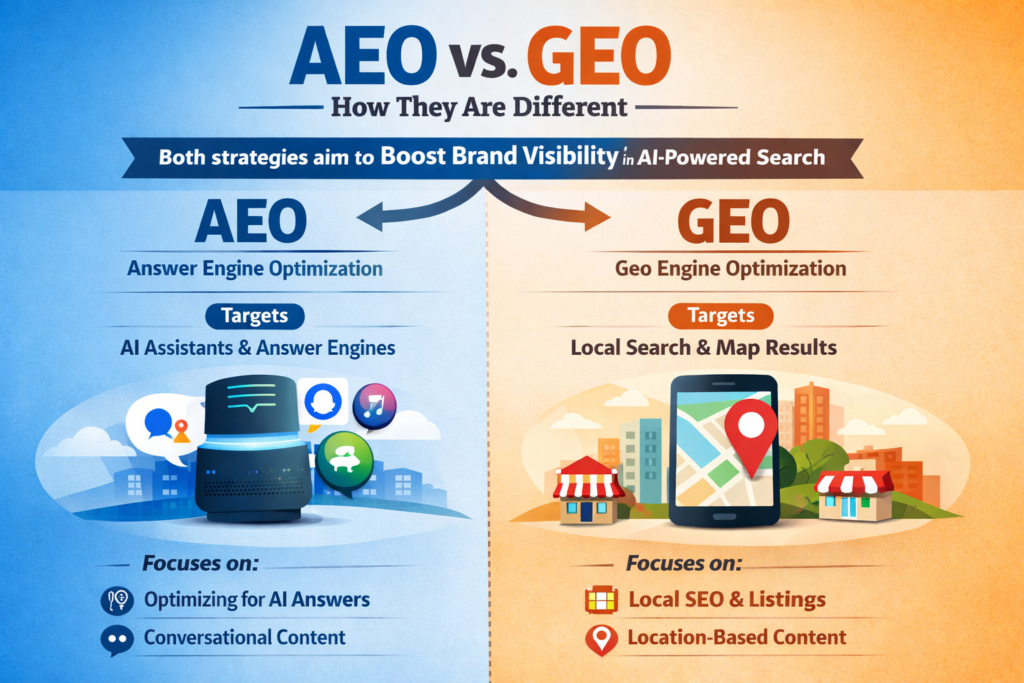
Why AEO and GEO are Important Today
Search behavior is changing quickly.
Before:
People clicked links and read full websites.
Now:
People want instant answers.
Voice search is growing.
AI tools give summarized responses.
Because of this change:
Websites must provide clear and structured information.
Content should be easy for both humans and AI to understand.
Businesses and marketers who adapt early can get better visibility and trust.
How to Use AEO and GEO in Your Content
You don’t need advanced technical skills to start. Just follow simple practices:
1. Answer Questions Clearly
Write content that directly answers common questions.
Example:
Instead of long introductions, include:
👉 “What is SEO?” followed by a clear definition.
2. Use Simple Language
AI prefers content that is:
Clear
Logical
Easy to read
Avoid complex sentences.
3. Structure Your Content
Use:
Headings (H2, H3)
Bullet points
Short paragraphs
This helps both readers and AI understand your content faster.
4. Add FAQ Sections
Frequently Asked Questions increase chances of appearing in answer boxes and AI summaries.
5. Show Expertise and Trust
Include:
Real examples
Practical tips
Helpful explanations
AI systems prefer useful and reliable content.
Relevance of AEO and GEO for the Future
AEO and GEO are becoming more important because AI is changing how people search online.
Future trends include:
More voice searches.
AI assistants giving direct answers.
Less clicking and more instant information.
Content creators, bloggers, and digital marketers should start adapting now.
Learning AEO and GEO can help:
Improve visibility.
Increase trust.
Stay updated with modern search trends.
Final Thoughts
AEO and GEO are not replacements for SEO — they are the next evolution.
SEO helps your website rank.
AEO helps your content become the direct answer.
GEO helps AI systems use your content when generating responses.
By creating simple, clear, and helpful content, you can prepare for the future of search.